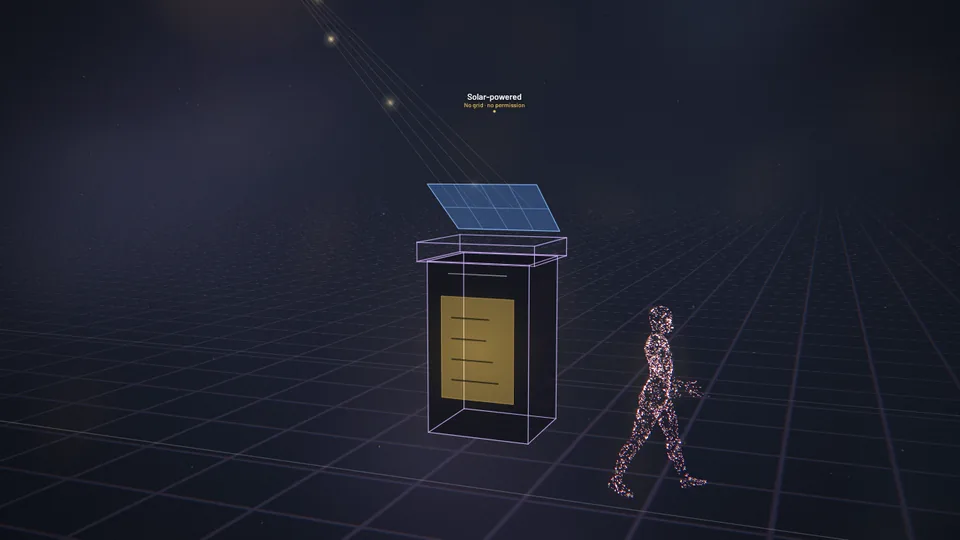
Before robots, William’s first public invention: a litter bin that paid for itself, with a solar-powered advertising screen built into it. He pitched it on BBC Dragons’ Den in 2009.
It ran in public on its own power, with no grid. Looking back, it was the first working part of something much bigger: a machine that lives out in the world, off the grid, and keeps going.
Where it started. Before Kar-go, William filed his first patent application, on power and guidance for robots and unmanned aircraft, in October 2013, with further filings in 2014 and 2015. Eighteen published patent records followed, in seven families, invented by William Sachiti and Dr Aparajit Narayan. Every filing, with its number and status, is on the record page.
Dr Aparajit Narayan, Professor Elio Tuci, Dr Frédéric Labrosse
Evolution1:02
Instead of programming a car to recognise a road, the team let small neural networks compete on simulated roads and kept the ones that went furthest, generation after generation.
The evolved controllers learnt to perceive colour dynamically, which let them follow roads with very different looks.
Dr Aparajit Narayan, Professor Elio Tuci, Dr Frédéric Labrosse, Dr Muhanad Alkilabi
Most roads in the world have no clear markings, so a vehicle has to tell road from verge the way a person does. This work showed that an evolved, active-vision controller could drive a robot along poorly marked roads in changing light.
It is the way of seeing Kar-go’s vision grew from, and why Eurovia UK trialled Kar-go in highway work: a crack from a puddle, a pothole from a shadow.
Two ways for a vehicle to find and follow any road, in any conditions: a controller trained by evolution, which adjusts its own perception as the road changes, and a deep-learning approach for detecting roads.
Aparajit later explained on film how Kar-go learns to see.
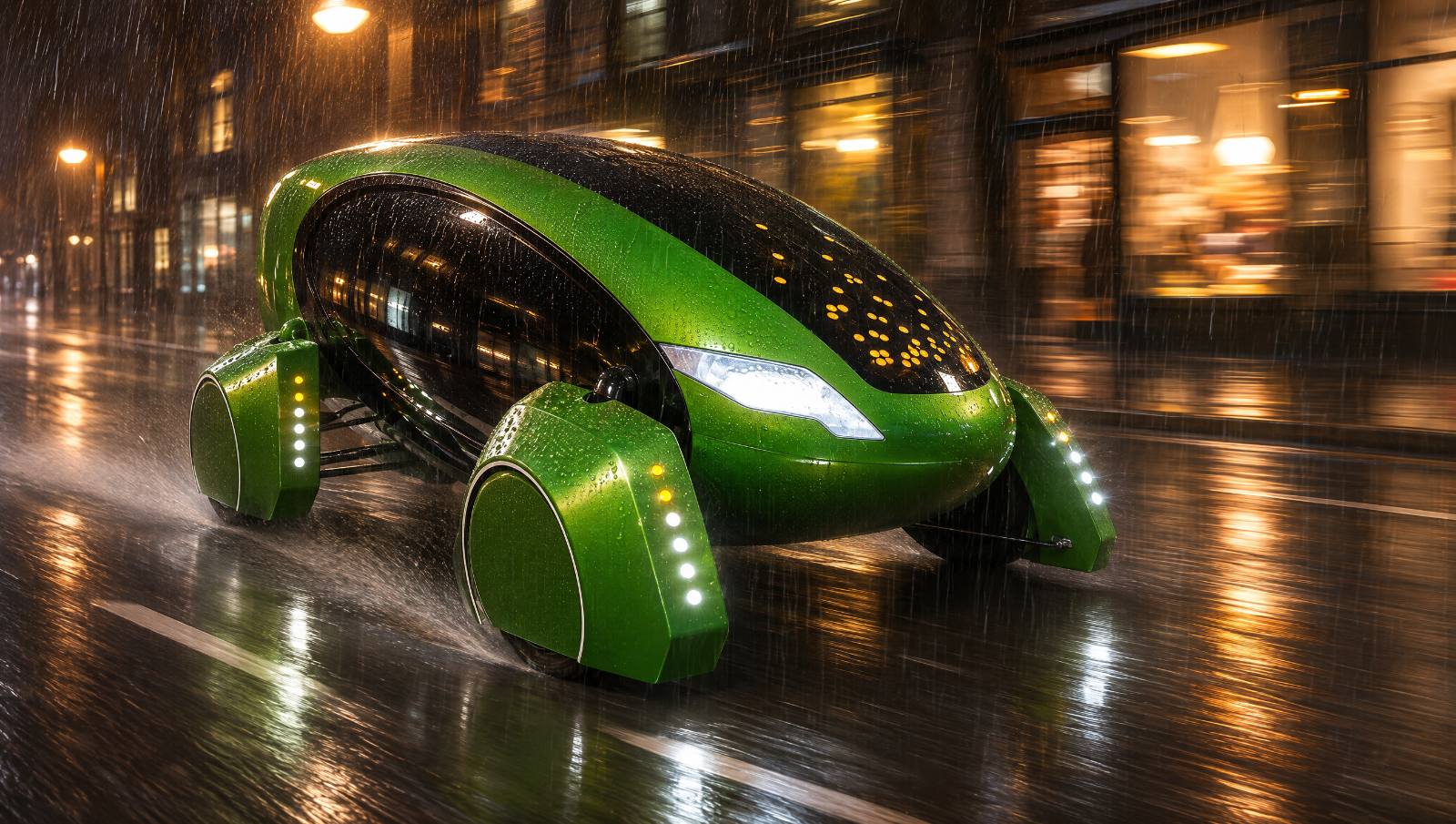
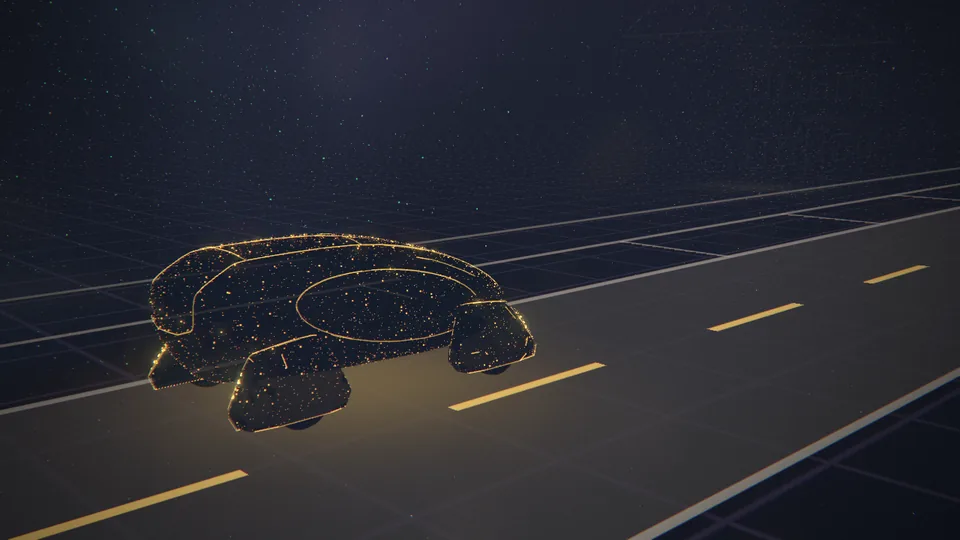
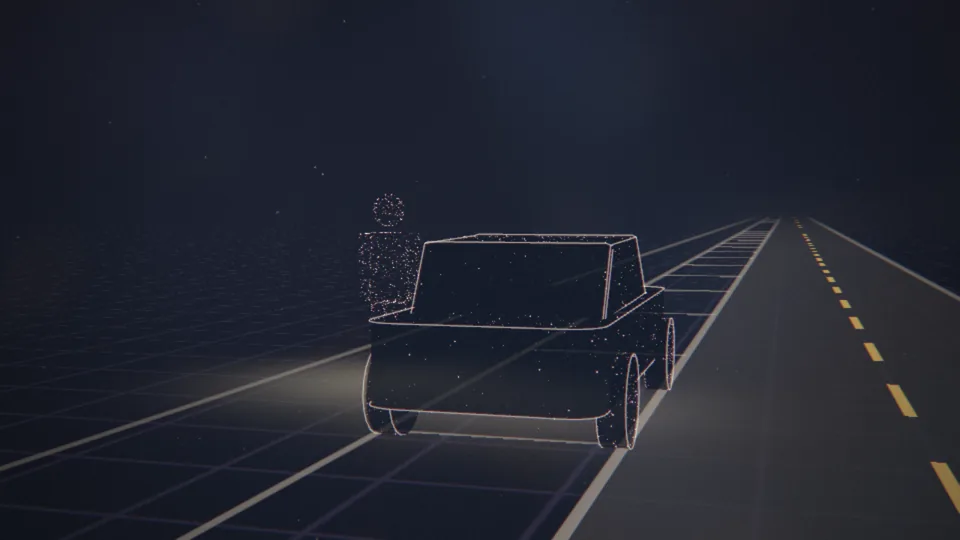
A vehicle drawn on a blank page by our own team and built in Britain, the first one with Pilgrim Motorsports in West Sussex, with its own parcel bay and its own intelligence.
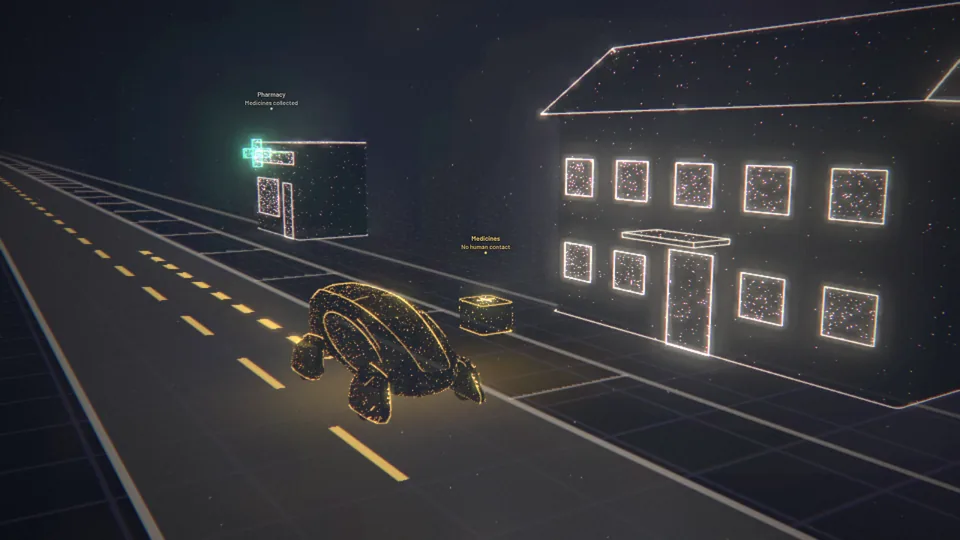
In October 2020 the DVSA approved it as roadworthy for trials on UK public roads, with a safety driver. It carried medicines to care homes in Hounslow during the pandemic and ran errands on RAF Brize Norton, and Eurovia UK partnered with us to trial it in highway work.
Inside Kar-go, a web of robotics readies each parcel for its address while the vehicle travels, and the bay opens at the back at standing height, so nobody has to crouch.
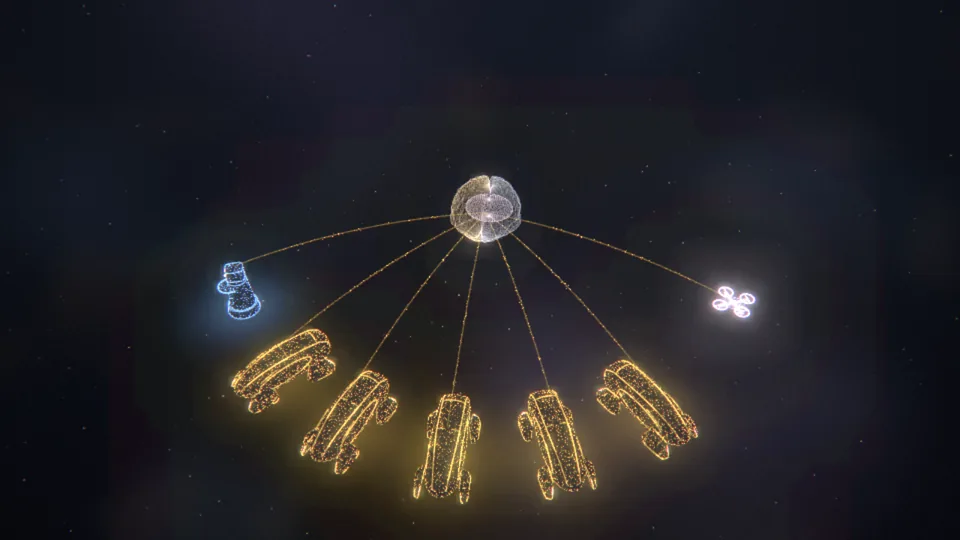
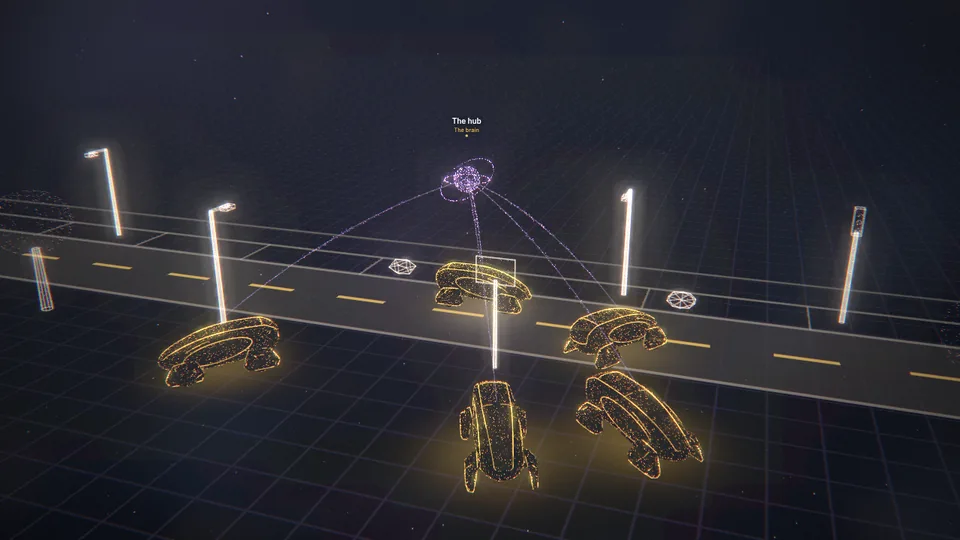
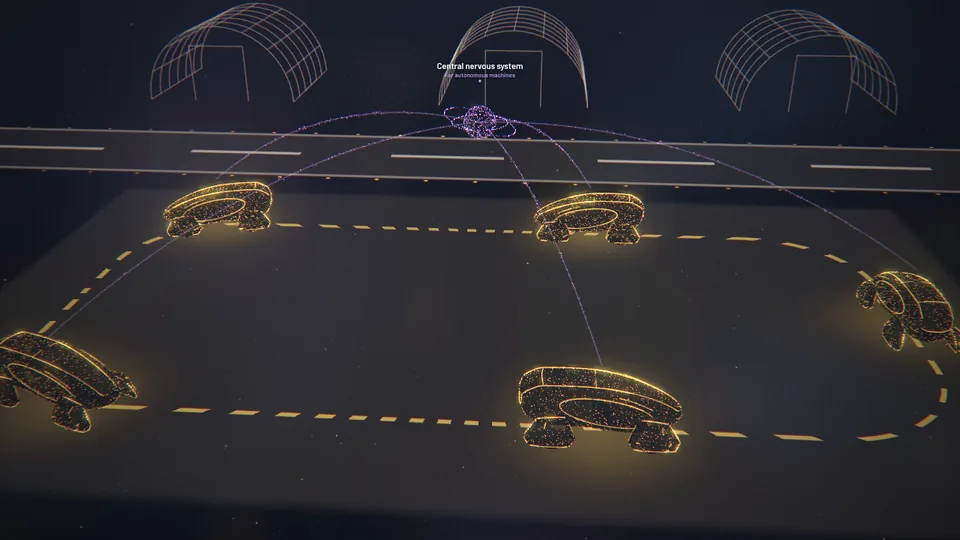
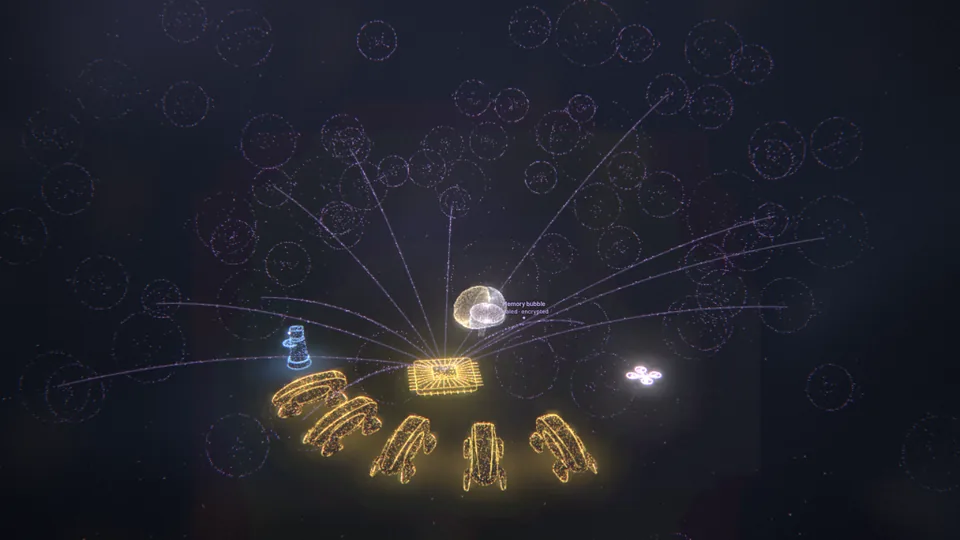
At RAF Brize Norton, our vehicles and a mobile command hub shared signals both ways. At every checkpoint each vehicle forgot what it no longer needed, and cut the hub, the vehicles kept talking to each other.
Trialled with the Royal Air Force, in a trial part-funded by its Astra programme. Filed as GB 2610855, with international and European applications, and available to license.
A fleet like Kar-go is watched over from a command station: usually a building on a dedicated test site, where a safety team follows each vehicle, sends it commands, and can take the wheel from afar. Take the fleet somewhere new, and the building does not come with it.
Space-Bus is that station on wheels: a monitoring centre, an office and a workshop in one, with a wall of monitors that opens at the back, a command seat, its own secure networks and solar power. It needs no fixed infrastructure, keeps its data on site, and can have a fleet working in a new place within weeks. It runs on Athena, which began here.
It kept watch over Kar-go on RAF Brize Norton, the Royal Air Force’s largest base, in trials filmed by BBC Click.
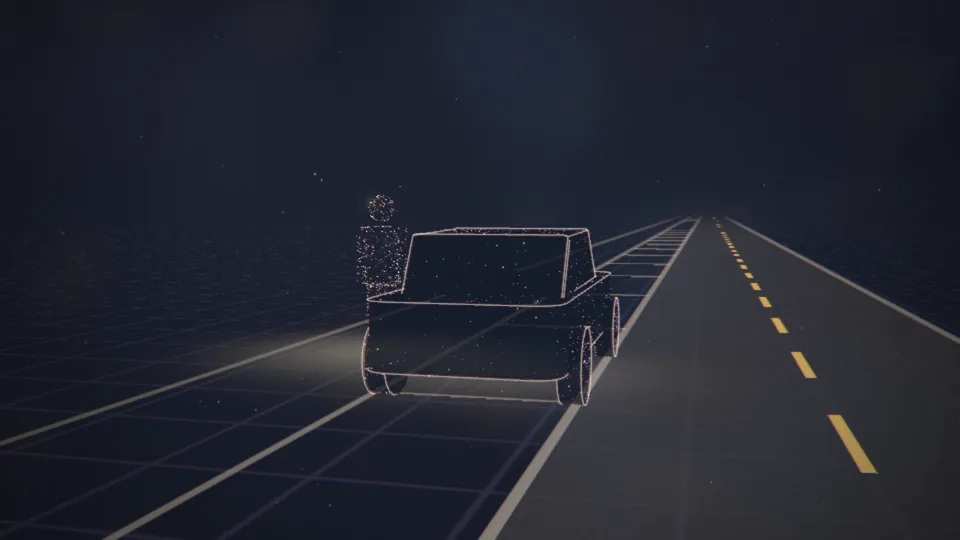
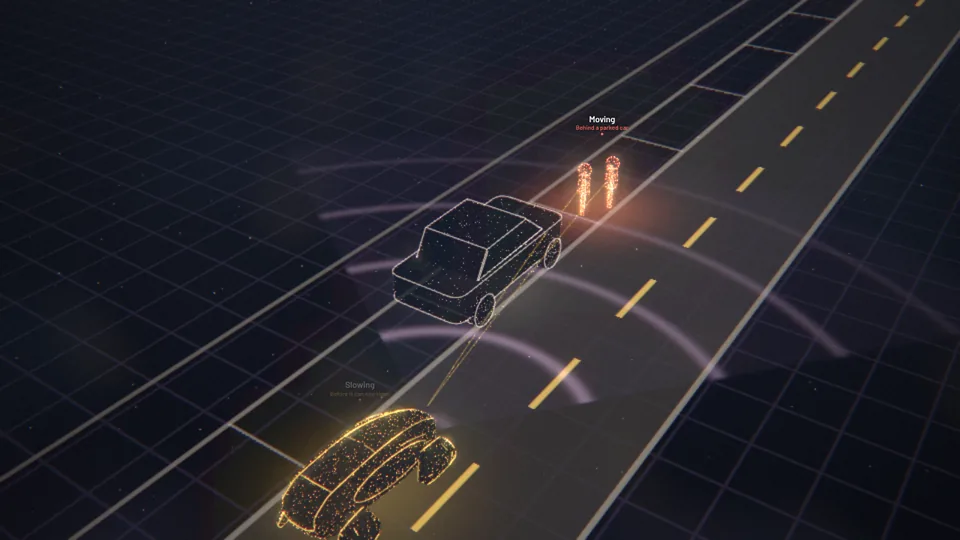
A parked van hides a child from every camera on a car. Radio waves don’t stop at the van: they reach the space behind it and come back carrying movement, and small, quick steps have their own pattern.
Filed as GB 2585332, and offered to carmakers to license.
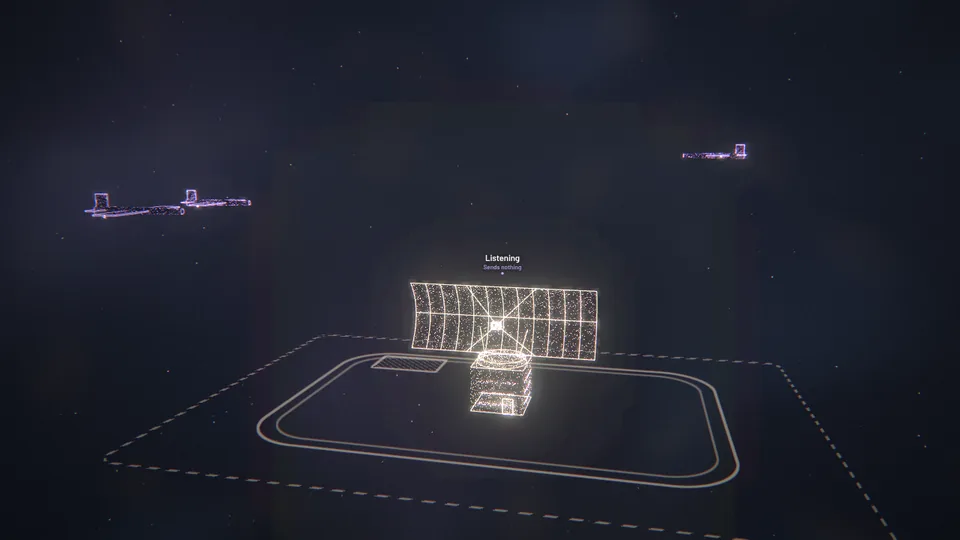
The Type 84 at RAF Neatishead, the last large Cold War air defence radar surviving in England, is a scheduled monument on our site. For thirty years, from 1963, it watched the North Sea.
A radar like it sends out a pulse and listens for the echo. We turned it inside out: it sends nothing, and lets every aircraft in the sky be its light, listening for what comes back. We call it the Chidziva Array.
It is not a weapon, so it was given a better job: as a radio network that needs no internet, it is how the Great Archive is reached.
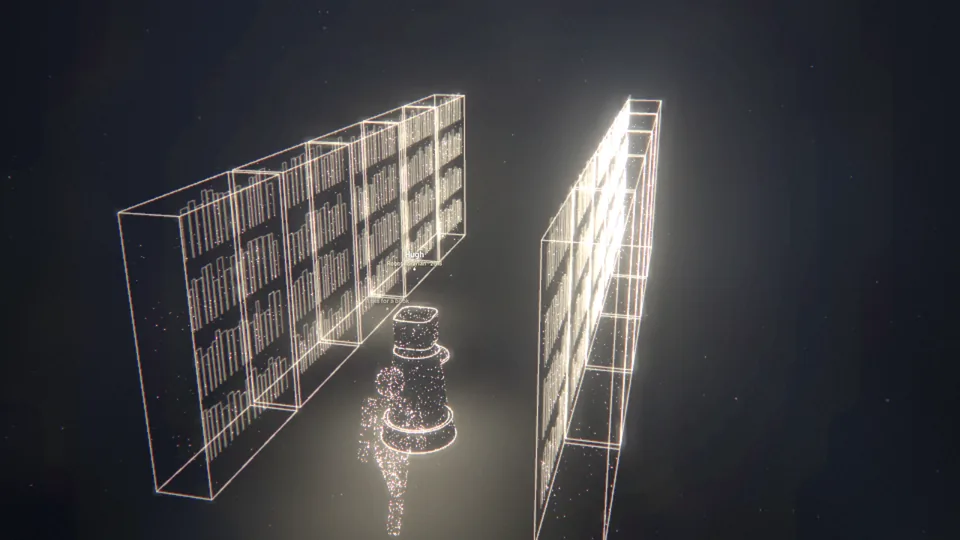
Built at Aberystwyth University, where William studied artificial intelligence and robotics: with Ariel Ladegaard he invented Hugh, a robot librarian, and built a working prototype. Ask it for a book, and it walks you to the shelf.
It joined the library’s own catalogue to a body that could move among people. The university called it a possible world first, and backed William to start Academy of Robotics. He said then that robots like Hugh would one day help in hospitals.
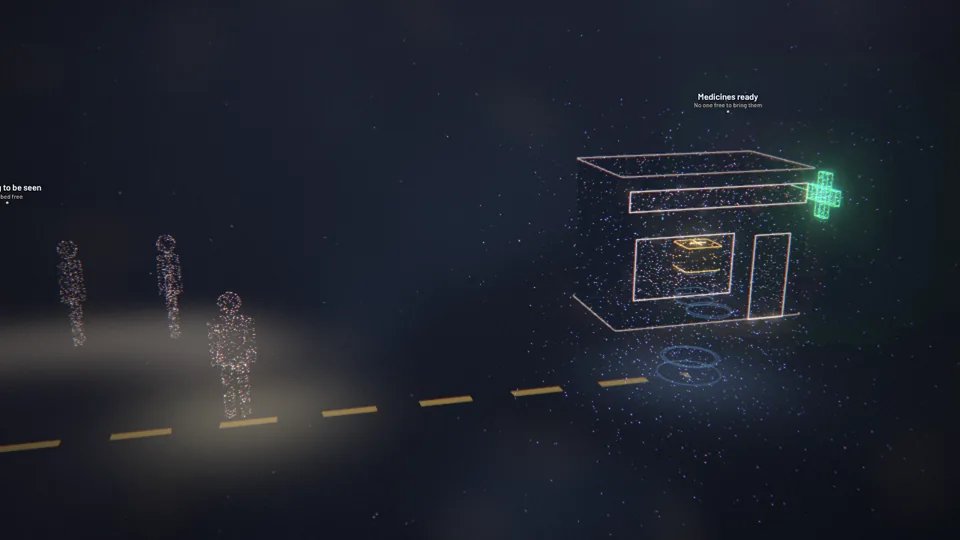
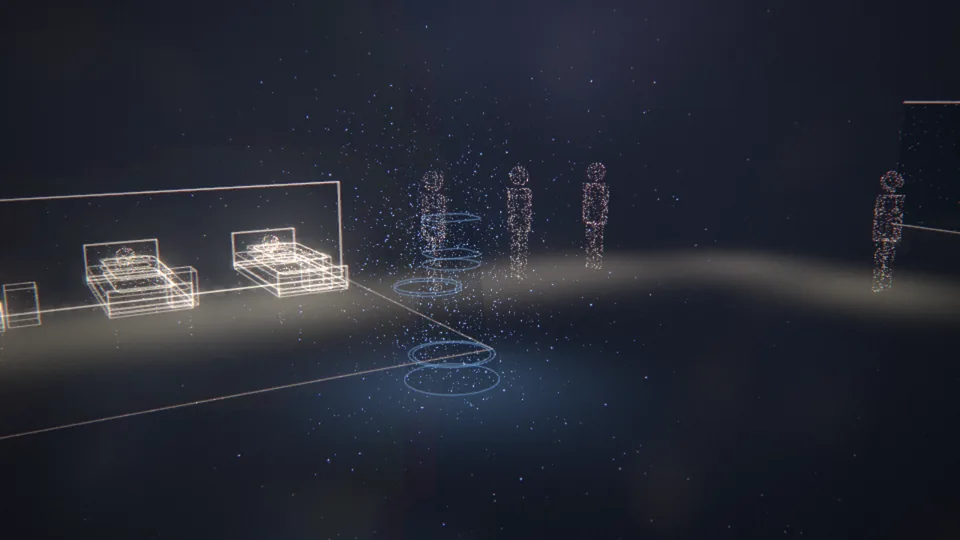
In late 2021 Milton Keynes University Hospital, an NHS trust, brought us a people problem: not enough hands. A patient well enough to go home could wait several hours for their medicines, in a bed someone else was waiting for.
So we built Milton, a helper robot that brings the medicines: there when it’s needed, and out of the way when it’s not. Trials began at the hospital in November 2022, in a partnership the hospital says is largely funded by Academy of Robotics.
It is built with the same technology as our vehicles: the same way of seeing, and the same care around people.
When the world asked when robots would be ready, we said: not yet. A robot without the proper mind is just a machine.
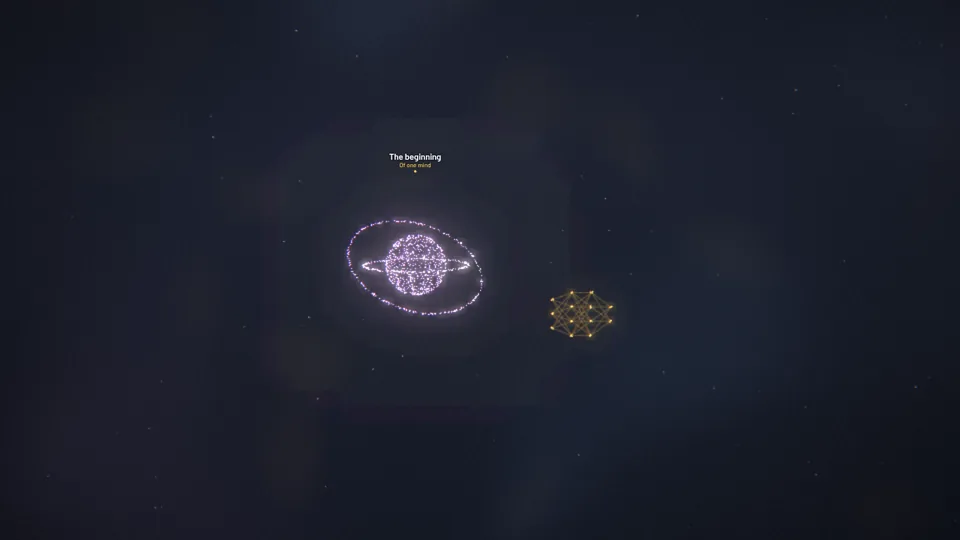
So we built the mind first, and kept evolving it with every invention: the vehicle, the hub, the hospital robot. It was always the same mind, growing. The body is next.
Most camera systems read every pixel of every frame, the sky included. Active vision glances at the whole scene, then sends small agents to look hard only where it matters: the gap beside a van, where someone could appear.
That is camera understanding on the computer a car already has. Granted in the UK as GB 2599364 on 12 April 2023; the European application is approved for grant, and there are US and international applications.
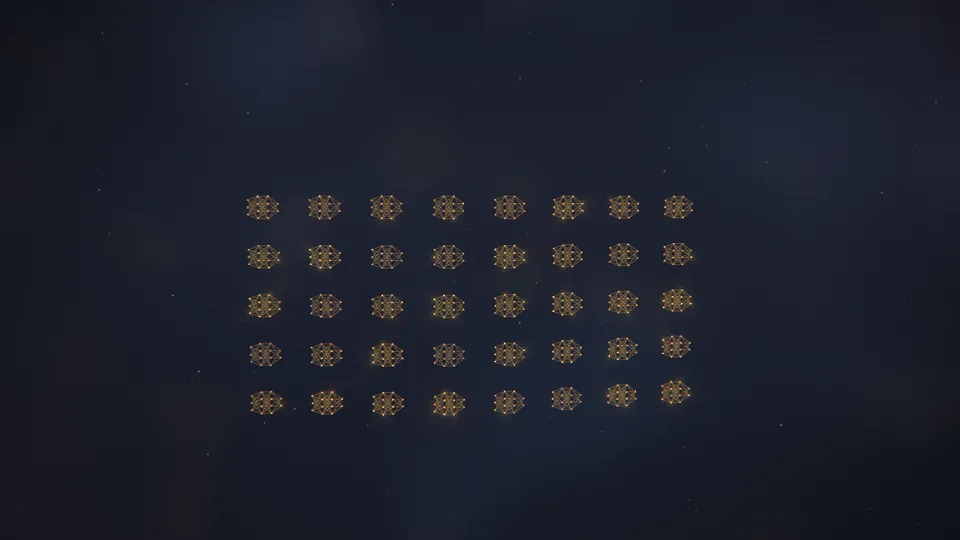
Start with a population of small networks, keep the ones that do the job best, copy them with small changes, and repeat. Because the size of each network is a choice, evolution can find one that fits the hardware it must run on.
It grew from Dr Narayan’s research at Aberystwyth University with Professor Elio Tuci and Dr Frédéric Labrosse.
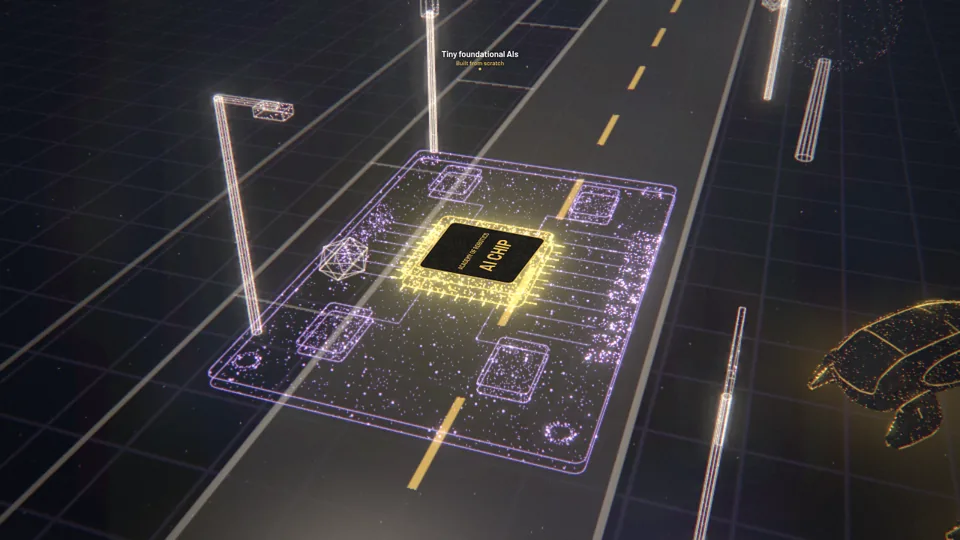
Take Kar-go’s body off and what is left is cameras for eyes, a few wires for nerves, and one small board that does the thinking. So we asked: what if that board went into other vehicles?
It fits the car, truck, tractor or bus a vehicle maker already builds.
Athena began in 2021 on the airbase at RAF Brize Norton, in the mobile command hub that kept watch over our fleet.
She grew into the one mind behind everything we make. Not a chatbot: a mind that sees, notices what it cannot see, remembers, and runs locally, not on the internet. She is the brain of the Great Archive, and she narrates our films herself.
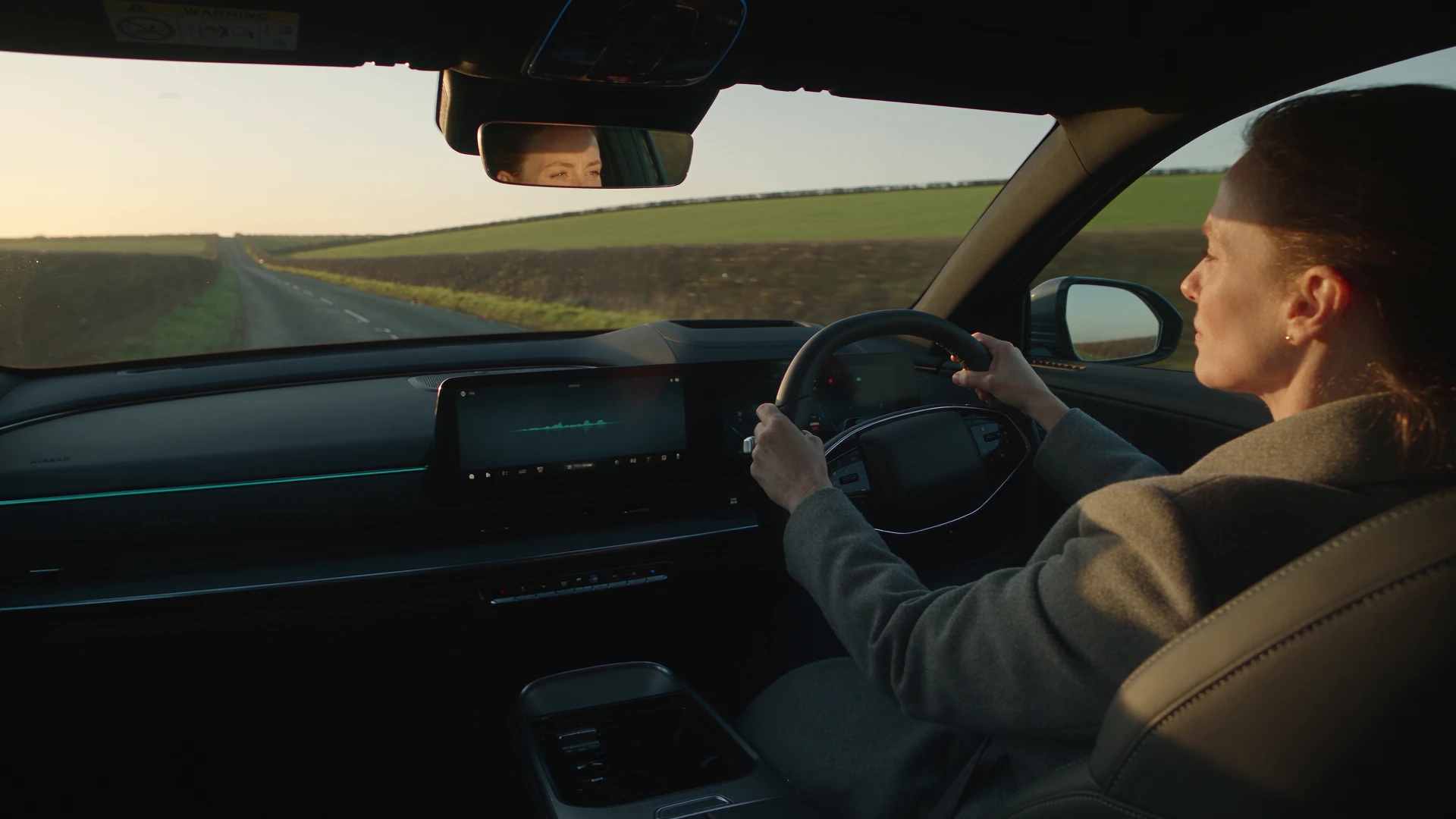
An assistant that remembers each driver on board: arriving near the school gates wakes what belongs there; rain on the canopy brings back how they like the car on a wet evening.
A UK patent application, filed in December 2023.
More to watch
Patents
GB202318450D0 (UK application, filed 2 December 2023)
What Kar-go taught us, for other people’s cars. It connects the vehicle’s signals, camera awareness and natural conversation, and it never steers, brakes or changes a safety setting.
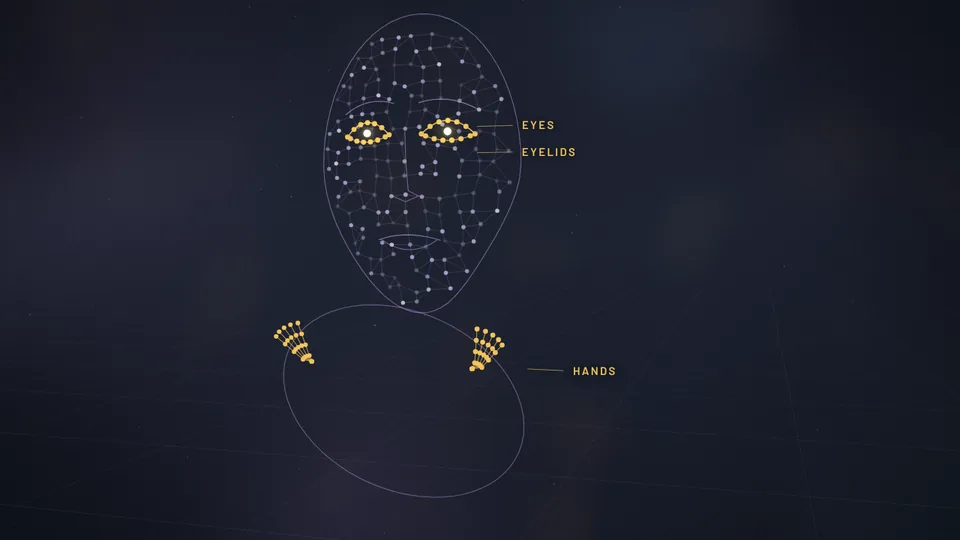
It watches eyes, eyelids and hands as a few hundred points, warns in time, and talks to the driver instead of beeping. No photos, no faceprints, no recognising who anyone is.
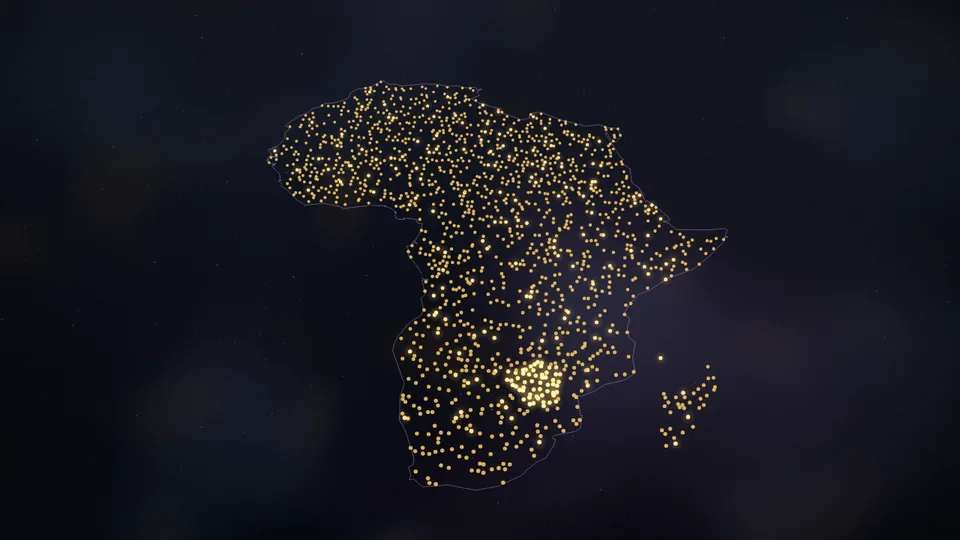
When an elder dies, everything they knew goes with them. The Great Archive records the oldest generations first, in their own words, and keeps it for good: held by Athena, carried by the Chidziva Array with no internet, and within reach of anyone near a Tree of Knowledge.